There are several reasons why a corvid may show white feathers, or what looks like white feathers from a distance. In short, I divide this into three practical categories: McDonald’s disease/malnutrition, where feathers are half-white, patchy, brittle or damaged; piebaldism or another genetic pigment condition, where the white feathers are usually in good condition; and normal white keratin sheaths while new feathers are growing.
McDonald’s disease
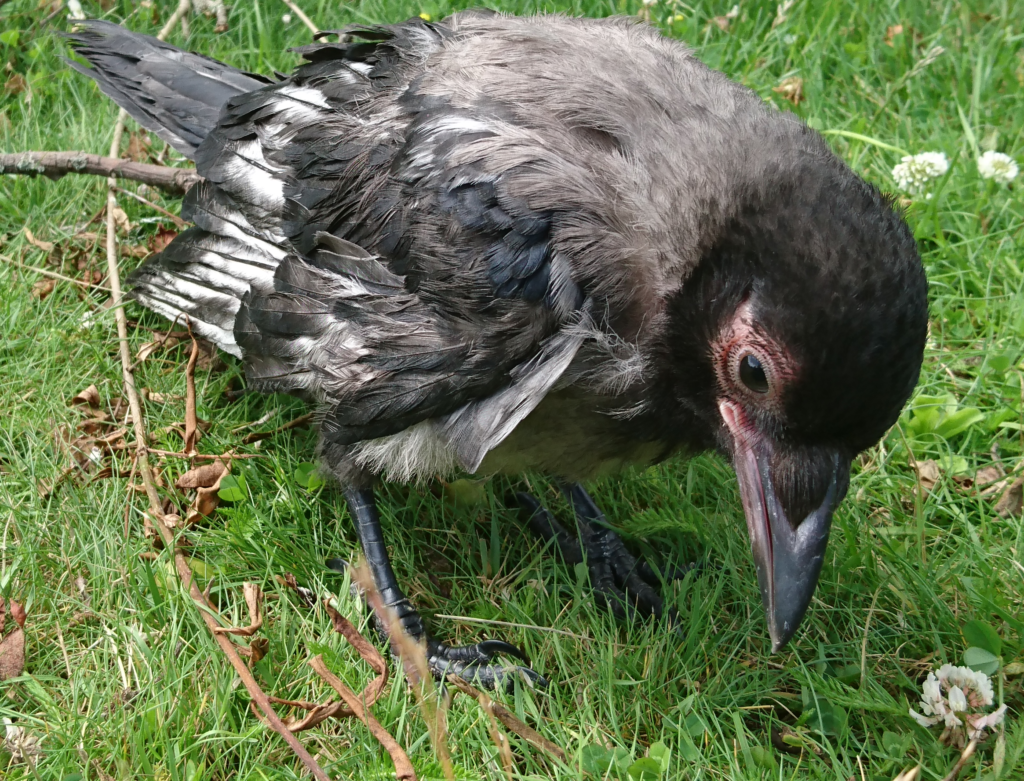
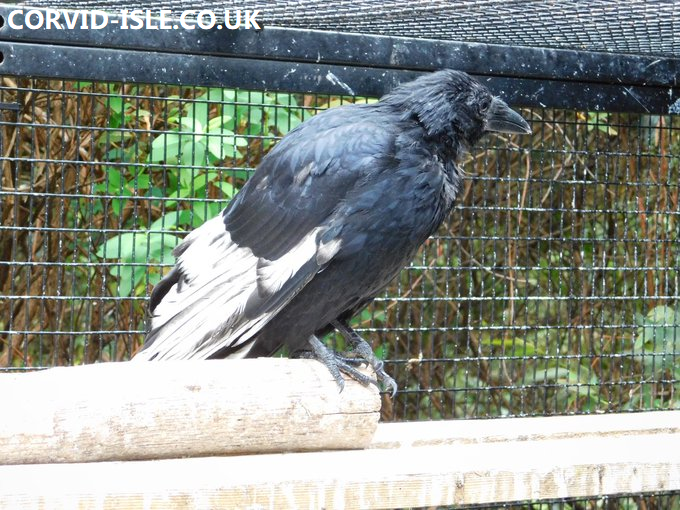
McDonald’s disease is the problem I most often see. Just as ducks should not live on white bread, corvids should not grow on bread, fries or other poor food either. The bird may feel full but still lack the nutrients needed to build normal feathers. In young birds and birds growing new feathers, this can lead to weak, pale, partly translucent, brittle or broken feathers. These birds can become soaked, lose heat and eventually lose the ability to fly well.
“White wing” or McDonald’s disease is linked to nutritional imbalance while the feathers are growing. In carrion crows, broad white bars and weak feathers are especially described in juvenile birds and may result from too little dietary protein. In practical terms, a grain-heavy diet from human rubbish or unsuitable bird-table food can leave growing chicks short of high-quality animal protein and essential amino acids, including lysine. Naturally, young corvids are fed mostly insects and meat from scavenged or hunted animals, which provide the concentrated protein needed for normal feather formation.
Short sources for diet and feather growth: Garden Wildlife Health, Urdaneta-Rincon & Leeson 2004, Frontiers in Physiology.
piebaldism, leucism and albinism
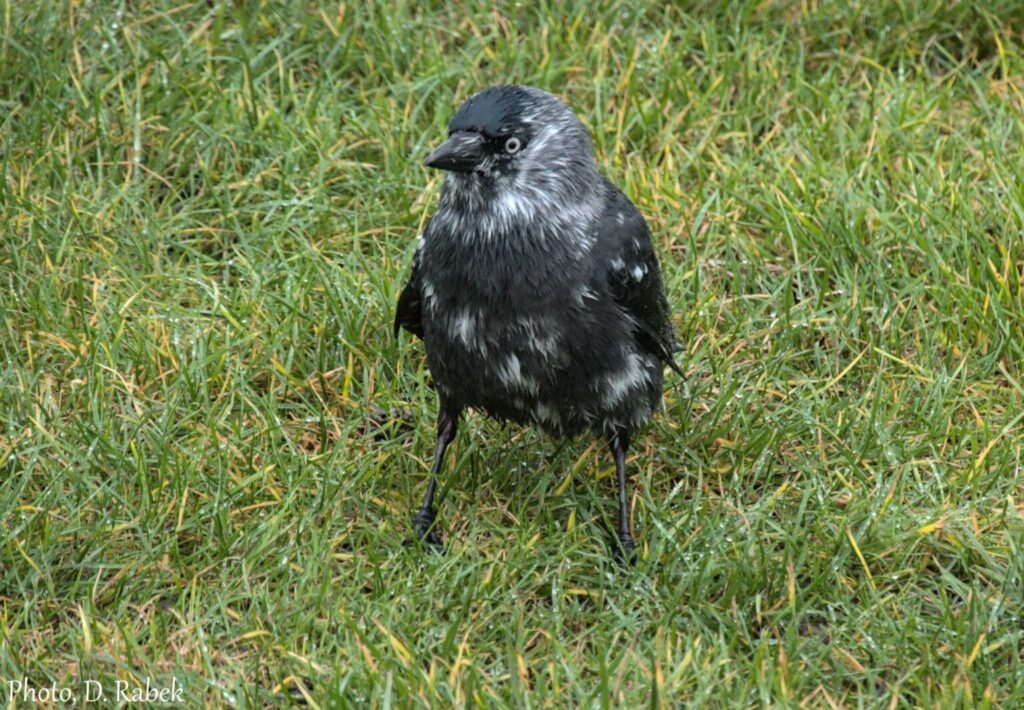
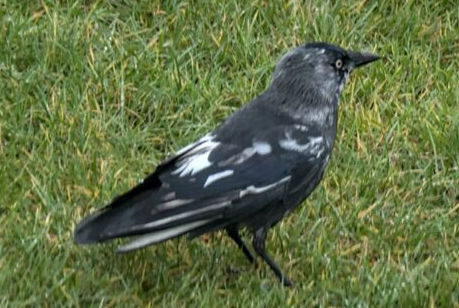
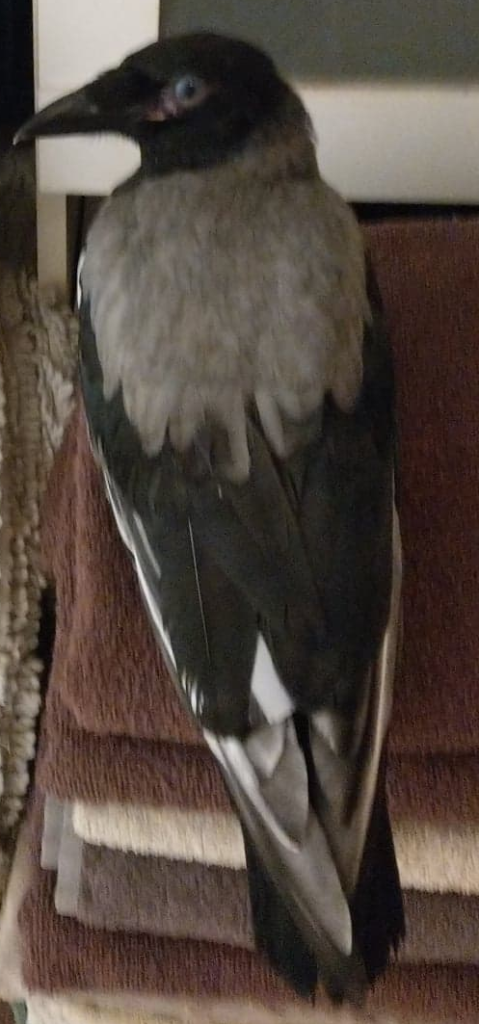
I previously used leucism as the main word on this page. That word is widely used, but it can be imprecise because people use it for several unrelated colour problems, including some forms of albinism, dilution, progressive greying and even non-genetic feather damage. For birds with scattered white feathers among normally pigmented feathers, piebaldism is often the more specific and useful term.
piebaldism means that some feather follicles lack pigment-forming cells, so feathers from those areas grow white while the surrounding feathers remain normally coloured. This is different from McDonald’s disease: in piebaldism, the white feathers usually have normal structure and are not brittle, transparent or broken from poor nutrition.
Short sources for the terminology: Cornell Lab Bird Academy, All About Birds and Audubon. Cornell Lab Bird Academy, All About Birds, Audubon.
How can you tell the difference? If you can come close or enlarge a photo, look at feather quality as well as colour.
| Sign | McDonald’s disease/malnutrition | piebaldism/albinism/genetic pigment problem |
| Feathers are in good condition even where they are white | X | |
| White feathers are pure white, with no weak translucent areas | X | |
| Scattered white feathers among normally pigmented feathers | X (piebaldism) | |
| Feathers are partly translucent or grey-white | X | |
| Feathers are broken | X | |
| Feathers are brittle | X | |
| Feathers look damaged or worn too early | X | |
| Feathers change colour after moult, for example black-white-black | X | |
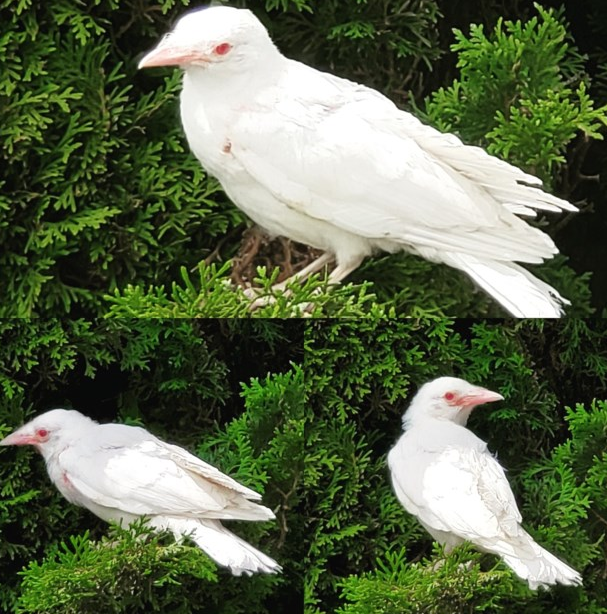
| Red or pink eyes | X (albinism) |
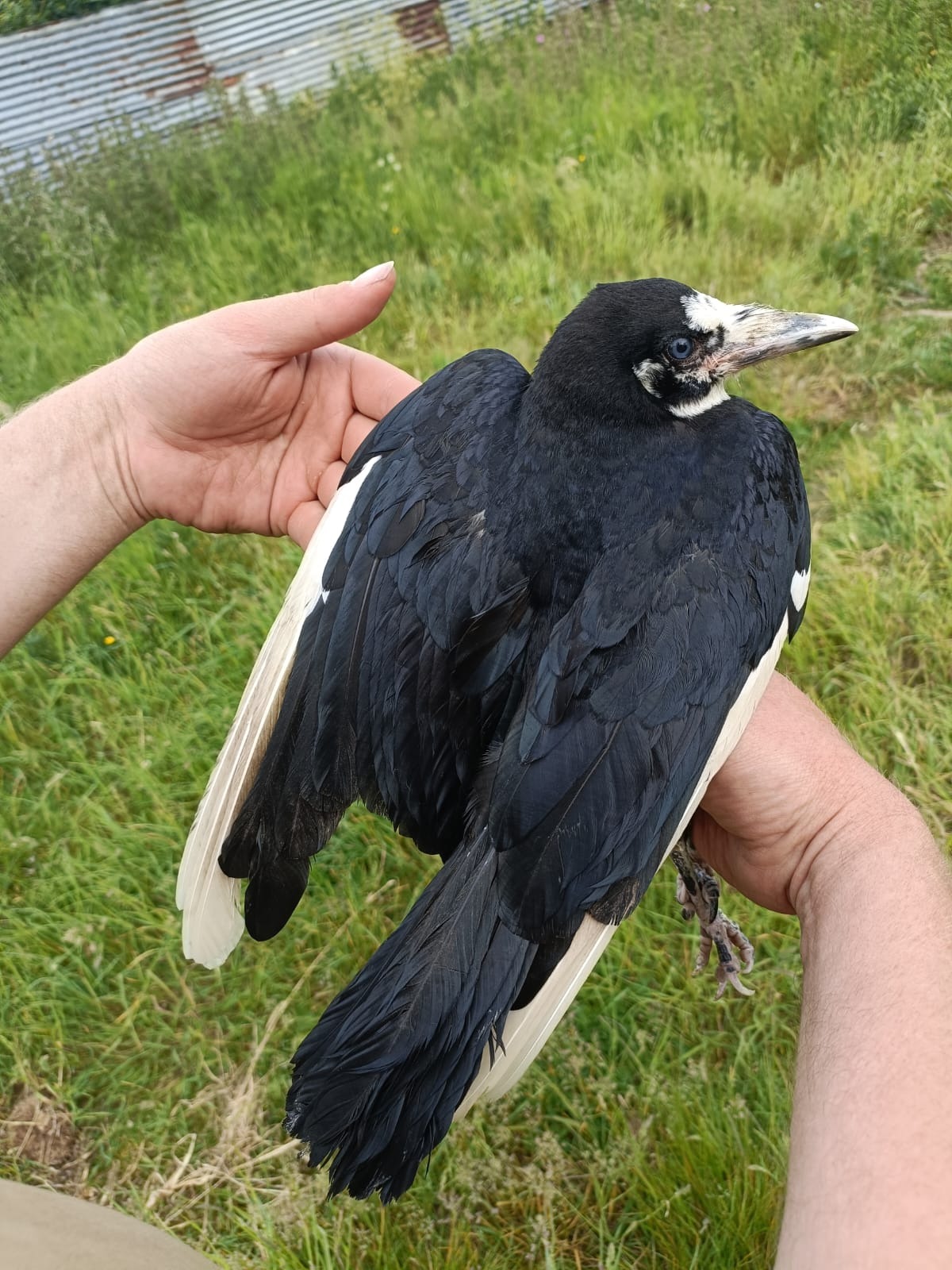
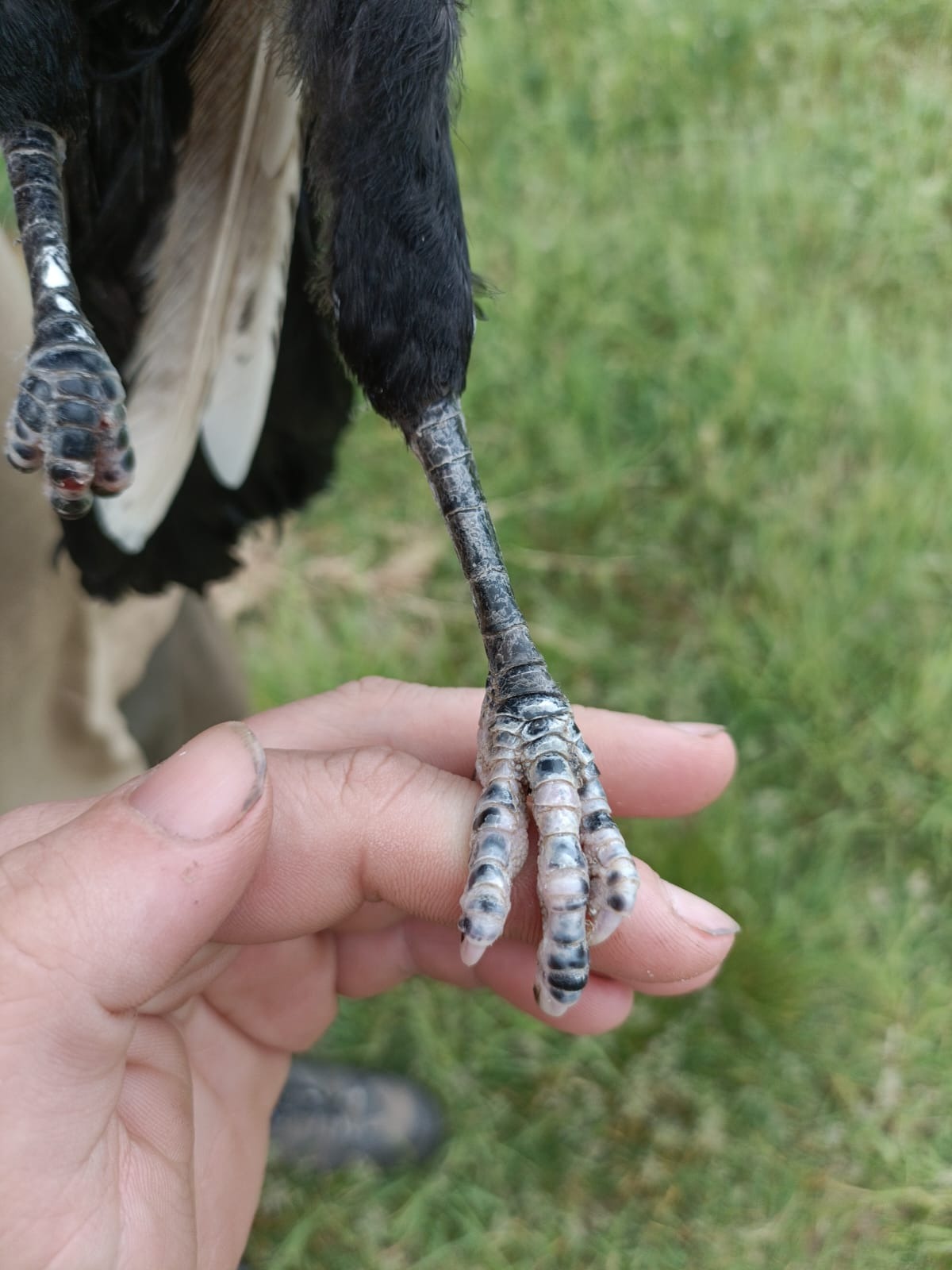
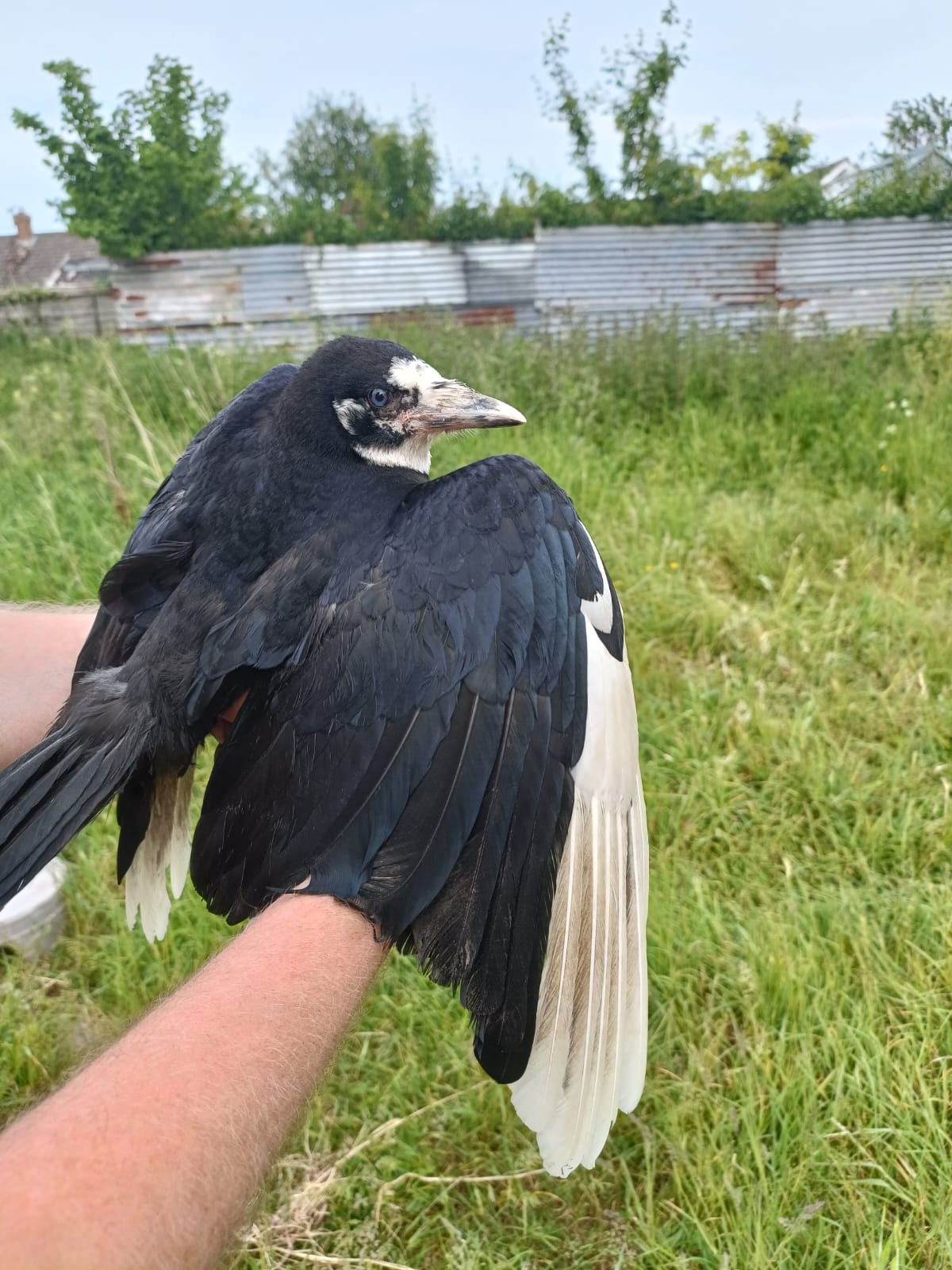
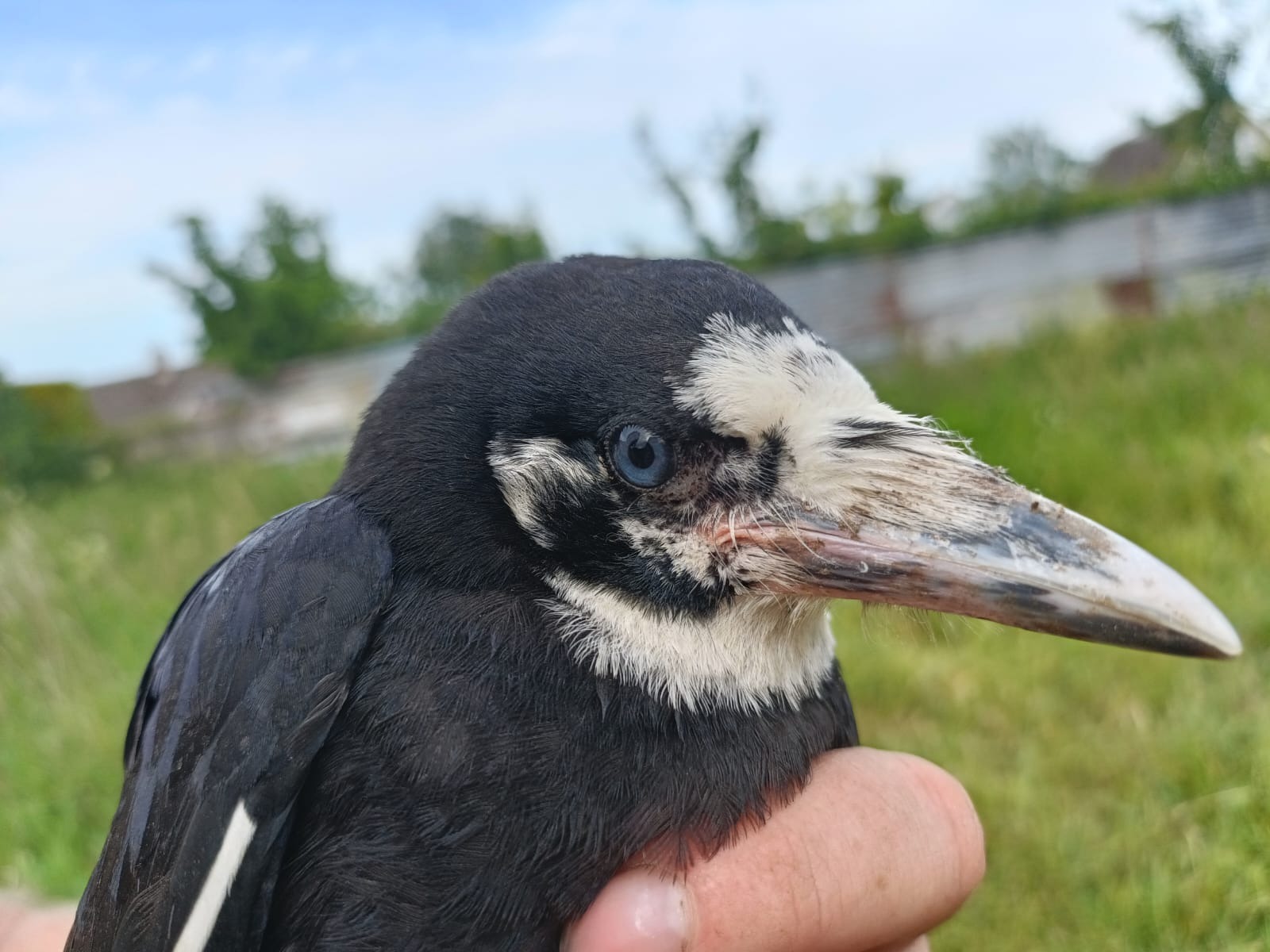
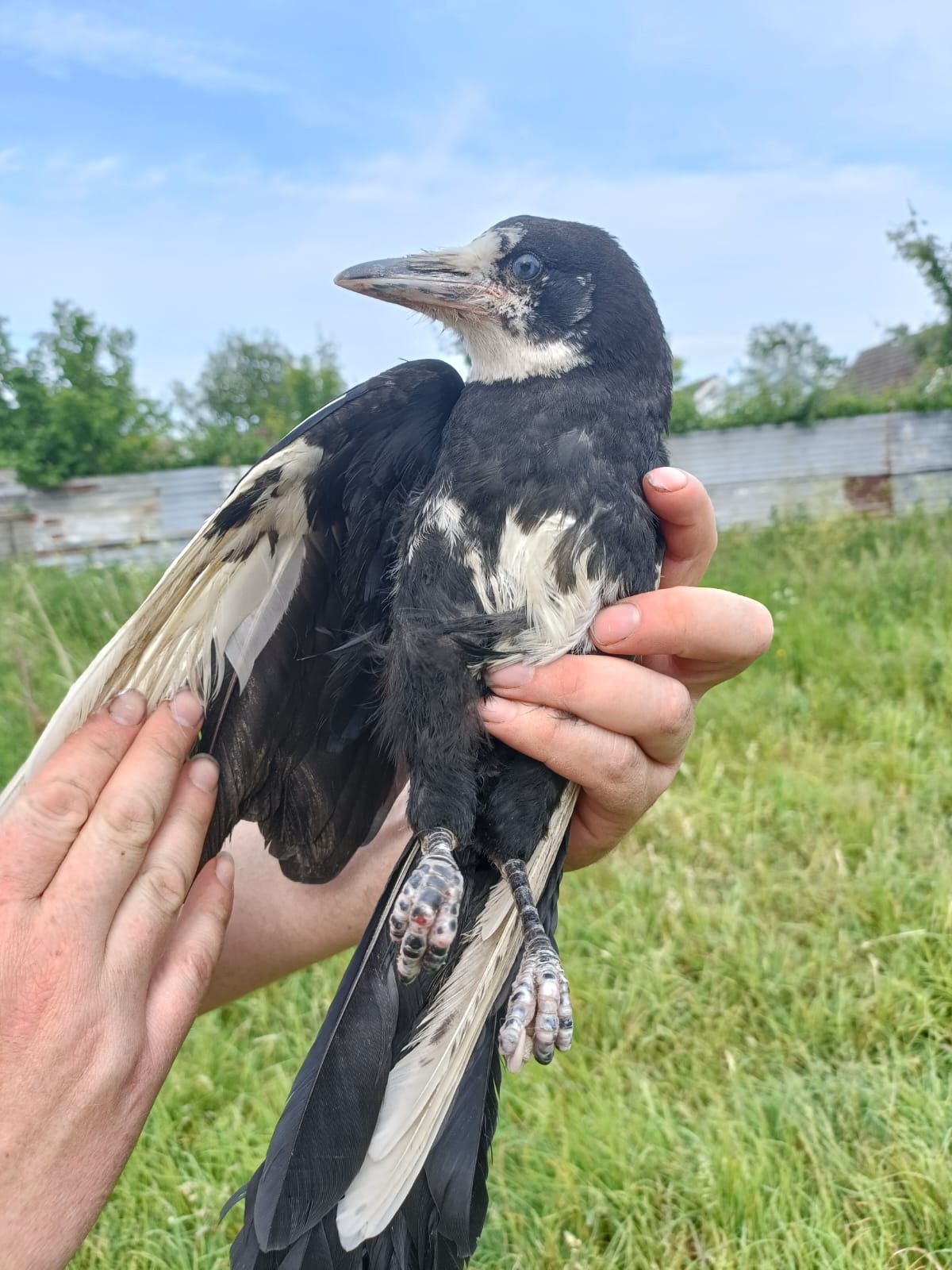
albinism: albinism means a much broader loss of melanin. In birds it may affect plumage and soft parts such as eyes, bill, skin and feet. True albinism is extremely rare and usually makes survival harder.
White parts that are normal while new feathers are growing
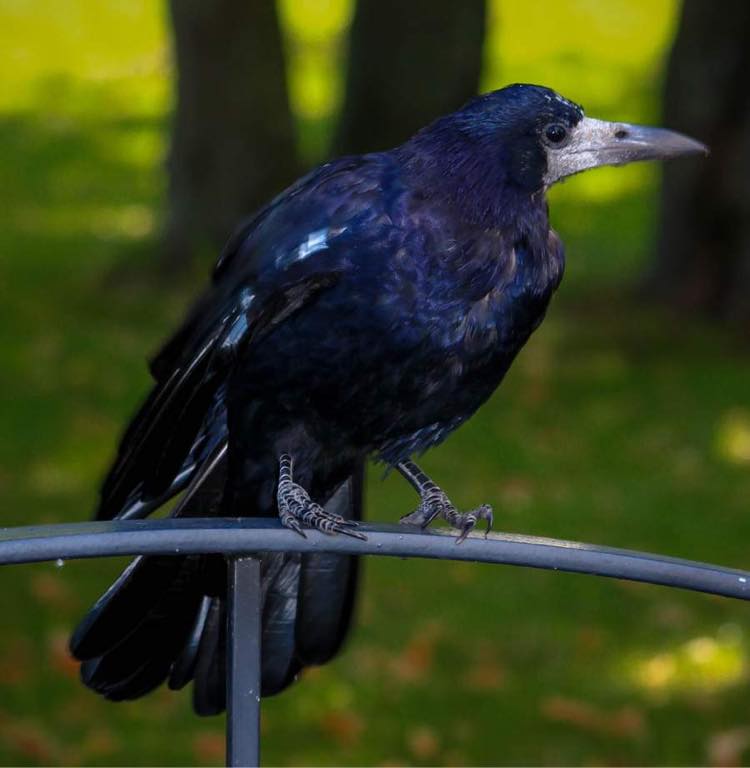
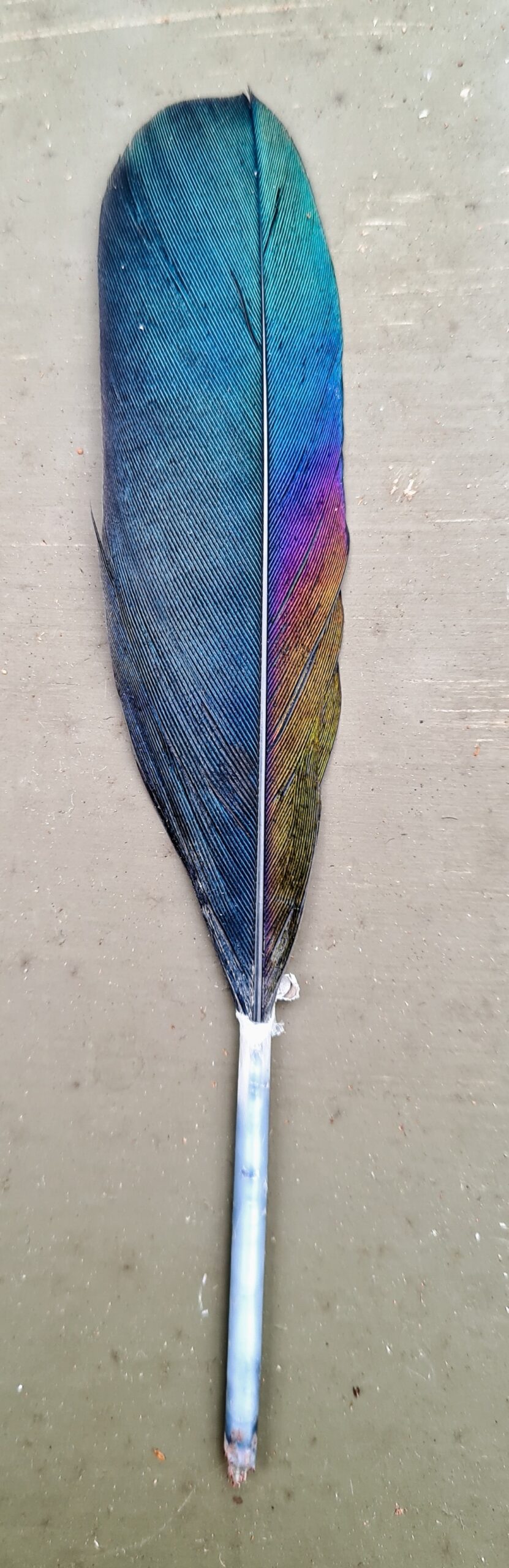
The white pieces or tubes you may see on the wing can simply be keratin sheaths around new feathers. New feathers emerge as pale pins. They are often called blood feathers because there is blood inside the shaft while the feather is still growing. When the feather is fully developed, the white keratin flakes off and the bird also preens away the parts that are ready to loosen.