| Guide | Treatments with natural remedies |
| Target group | Birds |
| Author | Corvid-Isle and Corvidlove – helpthecrows@gmail.com |
| Version | 2026-05-09 |
This page will be about herbal remedies that are suitable for the care and treatment of birds.
| NOTE: In all my guides, I start from a situation where a wildlife rehabilitator takes his responsibility to take care of the animals in an ethically correct way. You should always try to minimize stress for the bird and since the birds, just like humans, are not the same, it can mean that you handle a problem in different ways by being creative! If I see different ways of doing the same thing, I try to write it down in my guides, but it is always up to the wildlife rehabilitator to take their own responsibility. I do not have to write “I recommend putting the bird down” or “contact a veterinarian” or “according to law, you should …” because I start from the situation where you do the best for the bird and that you as a wildlife rehabilitator have learned to draw the line so that you do not end up in an unwanted or illegal situation. There may be an eternal battle between what you want and what is best for the bird. There are also many factors where a similar situation can give different results. For example: access to a veterinarian, lack of time, lack of knowledge and previous experience can include cause large differences in the treatment and decision-making process and indirectly also the end result. Knowledge of basic things can make a huge difference in the stress level of the crow. For example. avoid anything that is black or checkered. They do not like it instinctively and it creates stress when they see that you are dealing with something that is black. I put energy into my guides to make it easier for a wildlife rehabilitator to find information and to spread knowledge. Do you see a way to improve my guides or do you see a mistake or do you want to add something, feel free to inform me! If you are worried about doing something because it is new, ask other wildlife rehabilitators or a veterinarian for help. The guides are continuously updated, so make sure to always download the latest version from www.corvidlove.com |
It is important to understand that medicinal plants contain powerful, pharmacologically active substances, which in other words means that plants contain drugs. Like drugs, herbal remedies should be used with caution. While the right herb can help a bird, it can prove toxic if used incorrectly. If in doubt, consult your veterinarian before giving your bird any herbs or alternative treatments. In many cases, the right herbal treatment may be all your patient needs to get better. But at other times, herbs can be a useful complement to conventional treatments prescribed by veterinarians.
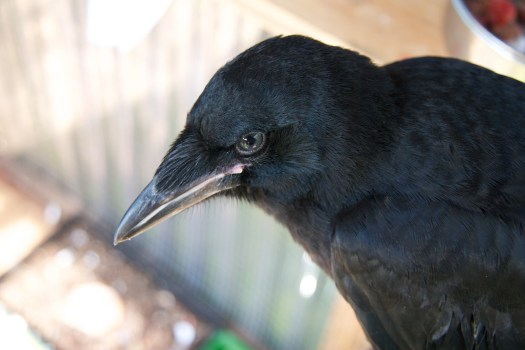
Before I write more about natural and herbal treatment options, I want to start this post with a list of plants and specifics ingredients to avoid s when treating birds.
Herbs to avoid includes: borage, calamus, chaparral, horse hoof, comfrey, ephedra/Ma Huang, gamander, licorice root, sturgeon, lobelia, pole mint, kermesberry, sassafras, and Yohimbin.
When using herbal tinctures, it must be remembered that these often contain alcohol, which can be toxic to birds, especially small birds and when ingested undiluted.
Herbal decoctions are therefore a much safer option. These can be made yourself with 25 g of dried or 75 g of fresh herb per 500 ml of boiling water. Wait until the water has stopped bubbling before adding the herb. Then let it stand and steep for about 10 minutes. The decoction lasts a maximum of 24 hours. Throw away what you didn’t use.
Commercial products and treatments
The first group of alternative, natural and herbal treatment options I would like to present are the following useful and potent commercial products.
WHEEZE EEZE Herbal Liquid (© The Birdcare Company)
This is a complex blend of natural herbal extracts that can be sprayed into the beak, nebulized or added to drinking water. This product has antibacterial properties and helps against respiratory infections and breathing difficulties.
Wheeze-Eeze (unfortunately UK only). Should anyone find the product elsewhere, please let me know.
Verm-X (© Verm-X)
This is a supplement to restore and maintain intestinal vitality and is made from 100% natural active ingredients. The Verm-X range is also useful for improving digestion and increasing energy levels. It is easy to give as liquid, pellets or in powder form as a daily treatment. Verm-X is a highly effective herbal product that provides internal parasite control. Note that the producers of Verm-X must follow the rules and regulations that apply to all herbal medicines, and therefore Verm-X must not be called a dewormer, as it is not a licensed medicine.
Verm-X Original Liquid
Swedish dealers: Verm-X Swedish dealer
Blast Off Anti-Mite (© The Birdcare Company)
This is an all natural parasite repellent product. The natural ingredients (Piperonal and cedarwood oil) have been combined with a powder to make it easy to apply to the bird. Blast Off Anti-Mite is safe for both the user and the bird. The product can be administered directly to both adult birds and chicks and can also be used in birdhouses.
From the UK: Blast Off Anti-Mite
From Dutch sites (no import tax/VAT): Blast Off Anti-Mite
Tip: If you open the link in Google Chrome, you can choose to translate the page into Swedish
Apple Cider Vinegar (ACV)
Apple cider vinegar (ACV) is made by fermenting the natural sugars found in fresh apples. Organic, unfiltered ACV contains strands of proteins, enzymes and probiotic bacteria. ACV can help kill pathogens and has a long history of use as a natural food preservative. Main substances in vinegar, called acetic acid, destroy harmful bacteria and prevent them from multiplying. There is also evidence to suggest that ACV has potential as an antifungal treatment. ACV can be used to keep bird baths fresh longer and is also an important component in the treatment of yellow bud, where it is added to the drinking water. 5 ml of apple cider vinegar should be used for 1 liter of plain water. Parasites cannot survive in acidic water. ACV lowers the PH value of the water to approximately 4-5 at the dosage described above.
When it comes to yellow bud and Candidiasis (also called candidosis or cod), one should also mention the fantastic treatment effect of pure fresh lemon juice, which is very effective when brushed on yellow bud plaques, which are then covered with a so-called "Lugol solution"
Lugol’s solution
Candidiasis can be successfully treated by brushing the affected areas with a gentian violet solution. Gentian violet is a synthetic, antiseptic dye named after the intense blue-purple color of gentian plants. It has mild antibacterial and antiviral properties.
Amazon.se: Gentian violet
Kvalitetsvaruhus.se: Gentian violet
GlucoGel (© BBI Healtcare)
GlucoGel is easy to use and quickly absorbed through the oral mucosa. It is also free of artificial colors, sweeteners, caffeine and gluten. It provides a fast-acting measured dose of glucose. GlucoGel is the perfect product to manage blood sugar levels in an emergency or to provide a short-term energy boost. It can be a lifesaver when treating collapsed birds as it provides a quick energy boost, which can give easily stressed birds the physical strength needed to start feeding independently again.
Finally something available in a Swedish store: GlucoGel
Traumeel Salve (© Bio Pathica)
Traumeel Salve provides temporary relief from mild muscle and joint pain as well as pain caused by overexertion, stretches, sprains and bruises. Traumeel ointment is a topical homeopathic pain reliever. It works by reducing inflammation and thereby temporarily relieving pain.
The nearest dealer is a Danish site: Traumeel
Traumeel S Ampoules (© Heel)
This is another homeopathic pain reliever to be used orally for inflammatory and degenerative processes associated with inflammation involving various organs and tissues with a particular focus on the musculoskeletal system. Traumeel S ampoules are safe to use for all birds because this preparation is alcohol-free.
The nearest dealer again seems to be a Danish site: Traumeel ampoules
Viruvetsan Mischung vet. (© DHU)
This is a homeopathic treatment used to effectively boost the immune system of stressed birds, which is particularly effective in treating viral infections. Since Viruvetsan contains alcohol, it must be diluted (10 drops in 50 ml of drinking water). This mixture should be given once a day, 2 to 3 times a week, drop by drop, with food. Viruvetsan is suitable for long-term treatment.
From Germany: Viruvetsan Mischung vet.
Natural cleaning agents
Baking powder
Baking soda works in two ways when cleaning. As a mildly alkaline product, it helps dissolve dirt and grease. As a scouring powder, it has a mild abrasive effect. Baking soda also helps neutralize odors.
Distilled white vinegar
Distilled white vinegar is another natural product that can replace strong toxic cleaners. The acidity of the vinegar is what makes it effective on some but not all surfaces. Like baking soda, vinegar can help remove odors and is effective at removing stains.
Make your own all-purpose cleaner
An all-purpose cleaner can be made by mixing 3 cups of warm water with 2 tablespoons of baking soda and 2 tablespoons of lemon juice in a plastic spray bottle. Shake the contents, spray over dirty surfaces and wipe. Another, slightly stronger all-purpose cleaner can be made from distilled white vinegar, when mixed in a 1:1 ratio with water. Lemon juice can be added to get a fresh citrus scent.
Natural products and herbs
The second part of this post describes other natural products and herbs that can be useful in treating common diseases and health problems in corvids.
Aloe
Aloe gel is cleansing, bile stimulating, antifungal, blood-stopping and soothing. It briefly forms a protective film (demulcent) and is effective against worms in the intestinal tract (anthelmintic). When applied topically, Aloe gel can help heal minor cuts, minor abrasions, and skin rashes.
Anise or anise seed
If a bird suffers from constipation, you can offer it an anise instead of the usual drinking water. Anise also works remarkably well as an antiepileptic. Anise can be used as is or combined with fennel.
Arnica (arnica)
Arnica is well known for its healing properties. It also acts as an anti-inflammatory and circulation stimulant. Arnica will not taken orally (in the mouth) and should not applied to open wounds. It is very useful and effective in treating painful bruises and in relieving acute and chronic joint pain.
Arnica gel
Cayenne
Cayenne is a universal digestive aid that contains small amounts of vitamins A, C, B complex, calcium, phosphorus and iron. It is anti-inflammatory and helps with arthritis. Cayenne contains capsaicin, which helps stimulate the appetite. It also works as a great natural treatment for sinusitis. When applied topically to the skin, cayenne has potent anti-inflammatory properties.
Chamomile
Chamomile is known for its anti-inflammatory, antispasmodic and calming properties. It counteracts gas formation in the intestines as well as nausea and vomiting (antiemetic effect).
A decoction made from the flowers of this plant has been shown to have anti-inflammatory effects. Therefore, chamomile decoction or chamomile tea is very helpful in the treatment of infectious diseases. Chamomile is also very useful in treating diarrhea caused by improper diet. Inhalation of vapors from chamomile tea is a very effective treatment method for diseases of the respiratory organs. Chamomile is one of nature’s safest and mildest sedatives, which can safely be used to calm birds in stressful situations.
Chamomile tea can be used for local wound cleaning as well as for flushing and cleaning infected eyes.
Cinnamon
Cinnamon is considered to have antibacterial, antimicrobial, antifungal and antioxidant properties. It can be used to prevent and treat e-coli and salmonella infections. It has also been used successfully to treat jaundice, candidiasis, yeast and aspergillus infections.
The easiest is to buy cinnamon tea (available at ICA) and give it instead of water.
Cornstarch
Corn starch (Maizena) or flour from corn kernels. If a bird has injured a blood feather and is bleeding, cornstarch can be used instead of blood stop powder. Squeeze some cornstarch onto the bleeding spot and gently press on the wound for a few seconds to allow the starch to penetrate. Be very careful with hand hygiene, wash your hands beforehand or use disposable gloves.
Blood stopping powder is available at the pharmacy. I would probably recommend using blood-stopping powder in the first place and cornstarch on occasions when blood-stopping powder is not available and you don’t have time to get to the pharmacy. If someone calls and says that they have found a bird that is bleeding and must quickly stop the bleeding, it is good to be able to inform the person that they can use Maizena, which many people still have at home.
Bomica Blood Stop
Octopus legs (sepia shell)
Octopus bones work well as a natural calcium supplement. Octopus bones contain a high dose of calcium and mineral salt. It also comes in handy by helping to keep beaks neatly trimmed.
Sepia shells can be bought at basically every zoo store. For example. Sepia shell / squid bone
You can scrape it with a knife to get a powder, which you can mix with wet cat food (for crows). Make sure no sharp pieces form.
Echinacea
Echinacea is known to act as an antibiotic, antiviral, immune-stimulating and anti-inflammatory and accelerates wound healing. As it strengthens the immune system, it is also known to speed up the recovery of generally debilitated birds and birds that have had pox virus infections.
Euphrasia
Euphrasia works anti-inflammatory, as an antihistamine and against mucosal inflammation (anticatarrhal). A decoction or tea can be used as an eye wash to reduce discomfort from irritated eyes.
Fennel
Fennel is known to counteract gas (carminative), be an antispasmodic (anticonvulsant), circulation stimulant and mild expectorant, it is diuretic (diuretic) and has anti-inflammatory effect. Fennel decoction or tea provides quick relief for constipation, gas (flatulence) and colic. It can also help counteract the production of too much gas in the abdomen of a bird suffering from a yeast infection. Fennel is particularly useful when raising sensitive fledglings and those that have not yet left the nest.
Linseed / linseed oil
Flaxseed oil is high in omega-3 fatty acids (alpha linolenic acid), which are associated with many health benefits. Lack of omega-3 fatty acids can increase the risk of inflammatory and metabolic conditions. Omega-3 fatty acids appear to lower blood pressure and increase the elasticity of arteries. Flaxseed/linseed oil may also have anti-inflammatory properties.
Ginger
Ginger is known to be a circulatory stimulant, blood vessel dilator (peripheral vasodilator) and expectorant, it prevents nausea and vomiting (antiemetic). It is antispasmodic, acts against gases in the intestines (carminative) and is antiseptic. Ginger has been used to prevent motion sickness when birds must be transported. A few drops of ginger extract can be added to the water, along with slices of fresh ginger, the night before a planned trip. Ginger is otherwise very useful in the treatment of nausea and regurgitation.
Lavender flower
Lavender is known to act as an antiseptic, antibacterial, antidepressant, relaxant, circulatory stimulant, antispasmodic and pain reliever. It counteracts gas in the stomach (carminative) and acts as a tincture for the nervous system. Lavender can be used to reduce stress and aid the digestive system. Lavender is known to eliminate nervous tension, relieve pain, disinfect the skin, improve blood circulation and to treat respiratory problems.
Mānuka honey
Originating in Australia and New Zealand, Mānuka honey is produced by bees that pollinate the native Mānuka bush. Mānuka honey has anti-inflammatory, antiviral and antioxidant properties, making it the perfect ingredient for wound dressings. Honey protects against infections caused by bacteria. Manaka honey also increases the production of special cells that can repair tissue damaged by infection. It is known to quickly relieve pain caused by inflammation.
Calendula
Calendula works astringent, antiseptic, antifungal, anti-inflammatory, immune stimulating, antispasmodic and wound healing. It quickly heals wounds including chafing and relieves other skin problems. It is also useful in treating birds prone to biting / plucking of feathers and suffering from skin allergies.
Passion flower
Passion flower acts as a sedative and pain reliever. It is therefore used to reduce nervousness and anxiety and to reduce pain. Passion flower is one of the best natural sedatives. Hyperactive birds, or those with compulsive behavior patterns such as feather-biting, may be helped by passion flower.
Criticism: https://svenskfarmaci.se/lakemedel/extrakt-av-passionsblomma-nar-sverige/
More information: https://bidistrikt-gob.se/passionsblomma-raddningen-for-den-som-har-svart-att-sova/
Peppermint
Peppermint is known to work as an antispasmodic, bile stimulant and pain reliever. It counteracts nausea and vomiting (antiemetic) and flatulence (carminative) and is a blood vessel dilator (peripheral vasodilator). It is a sedative herb, useful in treating anxious or feather-biting birds. Peppermint is also very helpful for indigestion.
St. John’s wort
St. John’s wort is known to work as an analgesic, anti-inflammatory, sedative, antidepressant and antiviral. It contains hypericum, which has antidepressant properties. It is often used as a natural substitute for Haloperidol (trade nameHaldol) in birds suffering from feather biting.
Thyme
Thyme is known to work as an antiseptic, expectorant, antispasmodic, antimicrobial, as an antibiotic and against external (topical) wounds. Due to its antifungal effects, thyme decoction or tea is a very good remedy in the treatment of diseases caused by fungi and yeast. Thyme is also very helpful in treating patients suffering from diarrhea.
Doctor’s turn (or Valerian root or valerian)
Fenugreek is known to act as a sedative, antispasmodic, expectorant, diuretic (increased production of urine), blood pressure lowering and counteracts gas that builds up in the intestines (carminative).
It can be used as a sedative and pain reliever. It is known to be stronger than most other herbal sedatives.
Unfortunately, I haven’t found where to get Läkevänderot yet.. Google Valerian drops and Valerian root.
Witch hazel
Applied topically as a spray, it has astringent and healing properties. It may also be useful in stopping external bleeding. It can be used along with or as an alternative to aloe vera spray when treating itchy skin.
Witch hazel