Common mistakes when finding a young crow:
– Taking it with you (in many cases the parents take care of it)
– Not to bring it (cats nearby may kill it immediately, the bird is too young to survive NOTE: raccoons do not take care of chicks that have ended up on the ground and cannot yet fly). So it is the situation that determines whether or not you do something.
– To give it food and water directly. If the body temperature is too low, the bird dies from the consequences. It’s easy to make mistakes when force-feeding with!
– Assuming that with a little Googling you will find the right diagnosis. Without experience, you are most likely to make mistakes.
– Not looking for knowledgeable people. More info here: https://www.corvidlove.com/emergencysituation/
– Important to know: A bird (any bird) that has been bitten by a cat needs antibiotics (Baytril) immediately. Otherwise, the bird will probably die within 48 hours (usually faster) regardless of whether it still looks healthy. Immediately look for a rehabilitator or veterinarian and tell them that a cat has bitten the bird. Then they must act in the right way. If you get an answer to “wait and see”, then it is not correct. Birds have no resistance to common bacteria found in the cat’s mouth and if they get into the bird’s blood, the chance of survival is zero without antibiotics.
Common mistakes when finding an adult crow:
– Not to act or not to bring it. If a human being can catch a bird without aids, then there is something wrong with the bird. “wait and see if it gets better” is rarely the right choice.
– Assuming that with a little Googling you will find the right diagnosis. Without experience, you are most likely to make mistakes.
– Not looking for knowledgeable people. More info here: https://www.corvidlove.com/emergencysituation/
– To give it food and water directly. If the body temperature is too low, the bird dies from the consequences. It’s easy to make mistakes when force-feeding with!
– Important to know: A bird (any bird) that has been bitten by a cat needs antibiotics (Baytril) immediately. Otherwise, the bird will probably die within 48 hours (usually faster) regardless of whether it still looks healthy. Immediately look for a rehabilitator or veterinarian and tell them that a cat has bitten the bird. Then they must act in the right way. If you get an answer to “wait and see”, then it is not correct. Birds have no resistance to common bacteria found in the cat’s mouth and if they get into the bird’s blood, the chance of survival is zero without antibiotics.
Common mistakes when feeding a crow bird:
– Giving only bread or worm or salted nuts. Don’t do it. It is not good, downright bad for the bird.
– Caffeine (cola, coffee). Caffeine is toxic/lethal to birds
– Chocolate is very bad for birds
– Avocados are deadly to many animal species including crows
– Milk is bad for almost all birds. They lack the enzymes to break down milk sugar and lactose.
More info on food for crow birds here: https://www.corvidlove.com/what-can-you-feed-crows-with/
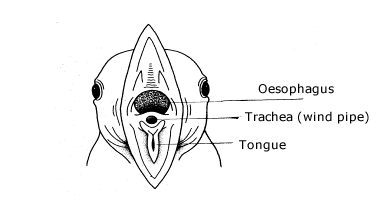
NOTE: Do not force-feed if you do not know how. Birds have an opening behind the tongue that leads directly to the airways. Food, liquids or medicine in the airways leads to death