| Guide | Diagnose and treat Leucocytozoon in corvids |
| Target group | Corvids and other birds |
| Author | H. – helpthecrows@gmail.com |
| Version | 2026-07-19 |
Short version: Leucocytozoon is an avian blood parasite. In corvids it can be an incidental finding, but it can also become clinically important when a bird is young, stressed, injured, immunocompromised, heavily parasitized, or co-infected with other blood parasites. Diagnosis should be based on a stained blood smear and, when possible, PCR. Treatment is mainly supportive, combined with veterinarian-directed antiprotozoal medication when the bird is clinically ill or parasitemia is high.
Important: The medication section is for veterinarians and experienced wildlife rehabilitators working with a veterinarian. These drugs can cause serious harm if the bird is dehydrated, anemic, tiny, stressed, or if the dose is calculated from the wrong salt/base form. Do not medicate a wild bird without veterinary supervision.
What it is
Leucocytozoon spp. are haemosporidian protozoan parasites of birds. Most species are transmitted by black flies (family Simuliidae); Leucocytozoon caulleryi is transmitted by biting midges. The parasite has tissue stages and blood stages. The blood stages are the part usually seen on a smear, but the tissue stages can be the part that makes the bird sick.
A positive smear or PCR result does not automatically prove that Leucocytozoon is the main problem. Many wild birds carry low-level infections without obvious illness. Always look for trauma, starvation, dehydration, bacterial infection, lead poisoning, aspergillosis, coccidia, trichomoniasis, and mixed blood parasites as well.
When to suspect it
- Weakness, listlessness, poor appetite, weight loss, or failure to improve despite good supportive care.
- Pale mucous membranes, anemia, tachypnea, or respiratory distress without a clear airway cause.
- Green droppings, dehydration, collapse, neurologic signs, or sudden deterioration.
- A young corvid in black-fly season, especially from an area with running water or high insect pressure.
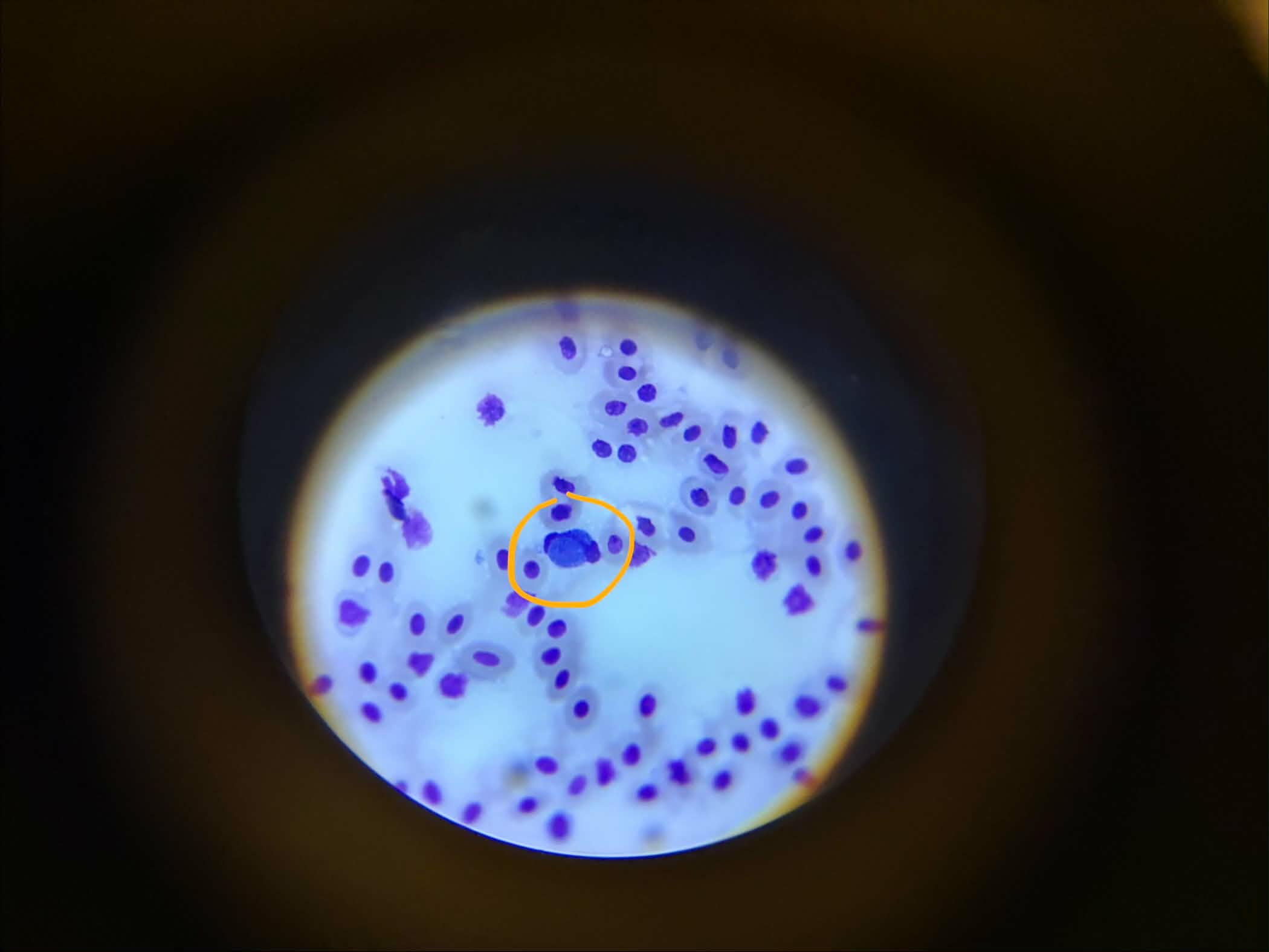
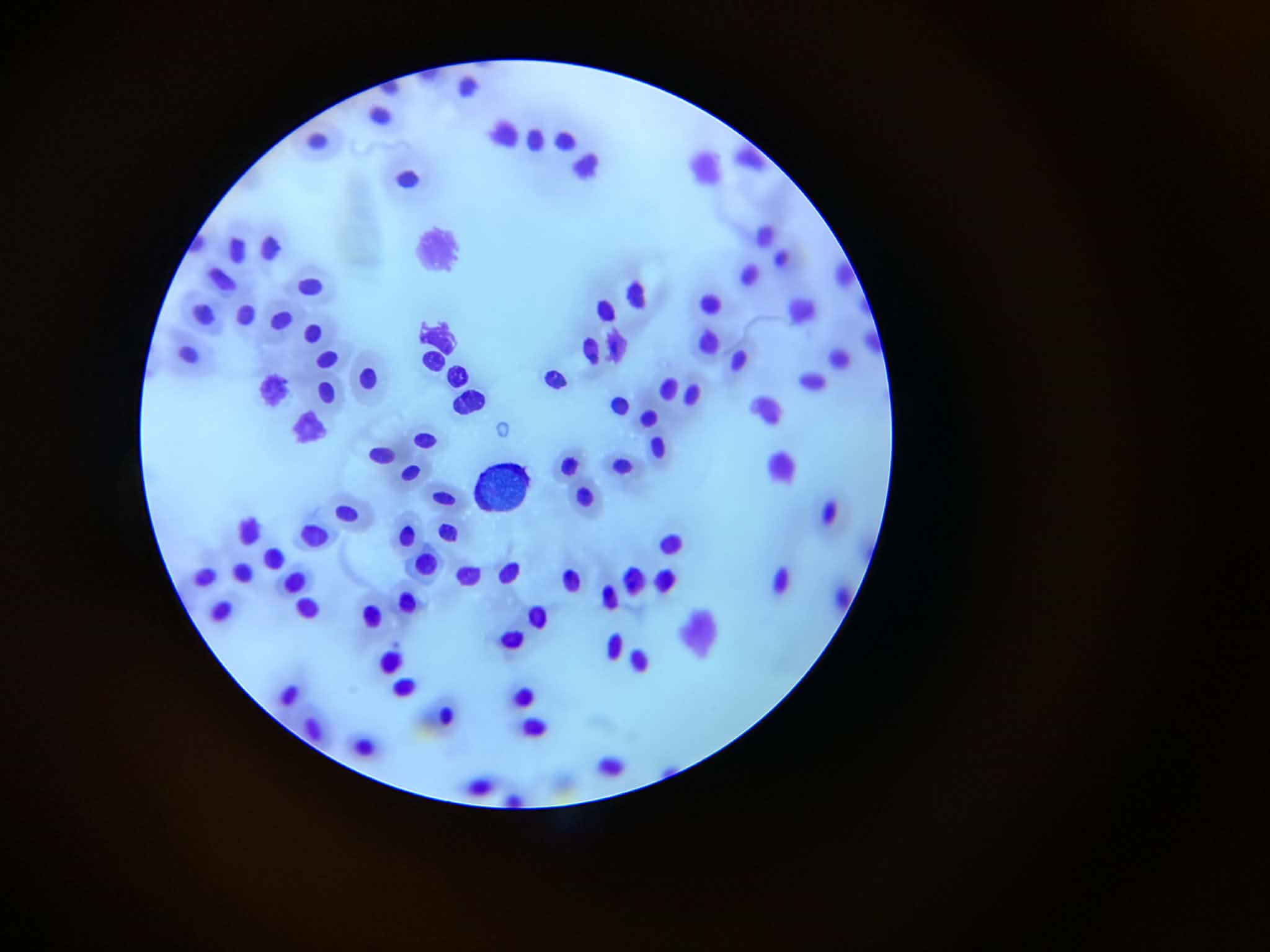
- Blood smear showing distorted host cells with non-pigmented gametocytes.
Diagnosis
- Stabilize first. Warmth, oxygen if needed, fluids, nutrition, and low-stress handling matter more than chasing a microscope answer in an unstable bird.
- Make a fresh thin blood smear. Use a small drop of fresh blood, air dry, fix with methanol, and stain with Giemsa, Wright-Giemsa, Diff-Quik, or another Romanowsky-type stain.
- Scan the feathered edge and tail of the smear. Use oil immersion at 1000x. Leucocytozoon infections can be low intensity, so one quick look is easy to miss.
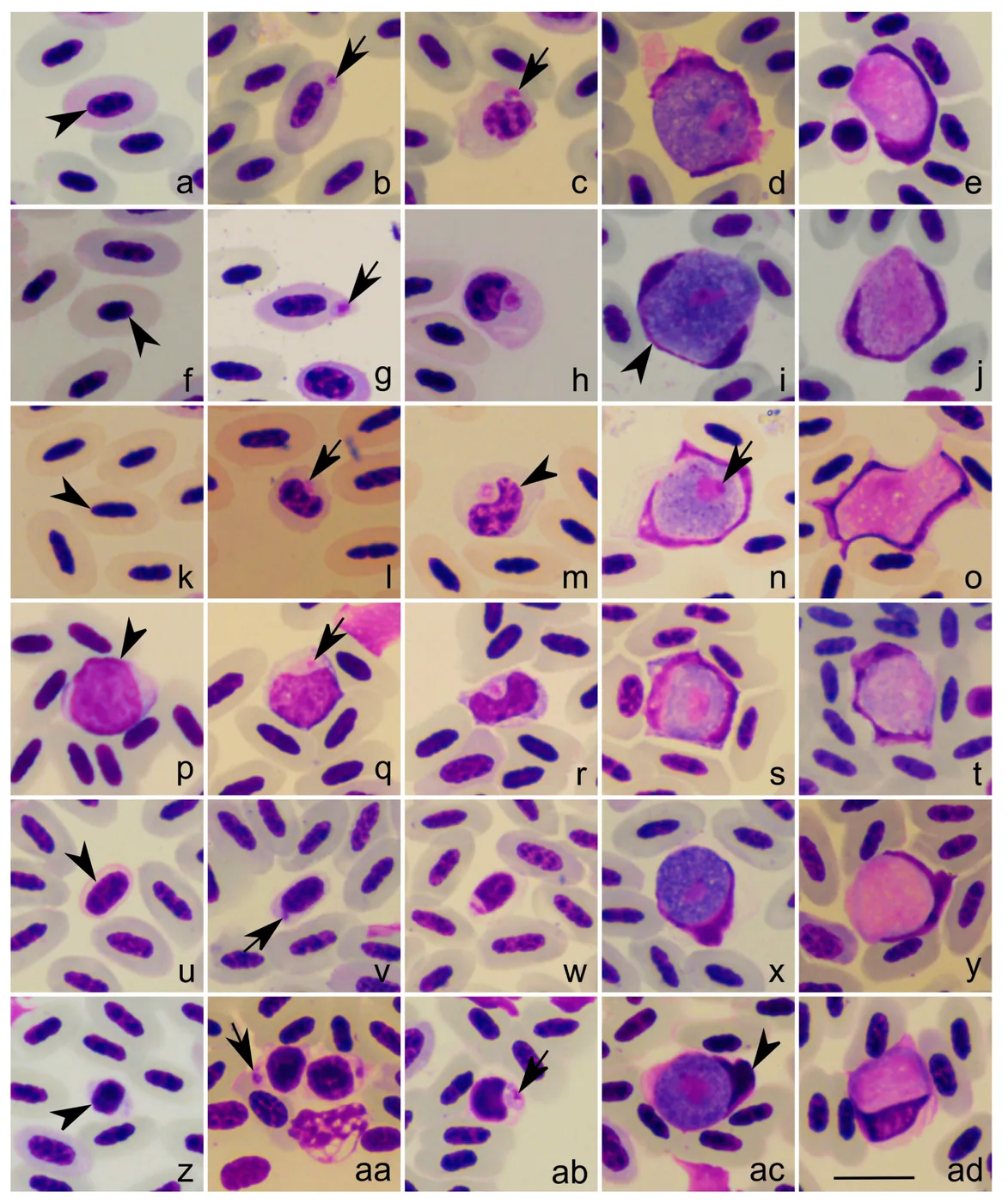
- Look for the pattern, not one odd cell. Typical gametocytes are large, lack brown/black malaria pigment, and distort the host cell. Depending on species, the host cell may be an erythrocyte, mononuclear leukocyte, or thrombocyte.
- Use PCR when possible. PCR on EDTA blood is helpful for low parasitemia, for separating Leucocytozoon from Plasmodium and Haemoproteus, and for detecting mixed infections.
- Use CBC/biochemistry as severity tools. Packed cell volume/hematocrit, total solids, leukocyte pattern, hydration status, liver values, uric acid, and body condition help decide how dangerous the infection is, but they do not diagnose the parasite by themselves.
- At necropsy or biopsy, use histology. Megaloschizonts/meronts may be found in tissues such as spleen, liver, kidney, lung, brain, or heart depending on parasite species and stage.
Microscope clues
- No hemozoin pigment: unlike many Plasmodium and Haemoproteus stages, Leucocytozoon blood stages do not contain visible malaria pigment.
- Host-cell distortion: the infected cell can become round, oval, or fusiform, and the host-cell nucleus may be pushed into a cap or band-like shape.
- Macrogametocytes and microgametocytes: mature forms may differ in stain color and nuclear appearance. Use several fields and compare with normal avian cells.
- Expect low numbers: wild birds often have low parasitemia. Absence on one smear does not rule it out.
Treatment principles
- Supportive care is not optional. Warmth, quiet, fluid correction, nutrition, oxygen when needed, and treatment of the original injury or disease are the foundation.
- Remove the bird from vectors. Keep the bird indoors or behind fine insect mesh. Black flies can reinfect birds and can also maintain transmission in aviaries.
- Decide whether treatment is actually needed. A stable bird with a low incidental parasitemia may only need monitoring and treatment of the real primary problem. A weak, anemic, dyspneic, or heavily parasitized bird deserves veterinary treatment.
- Recheck smears. Repeat PCV/hematocrit and blood smears during treatment and again after treatment. A falling parasitemia with improving anemia is more meaningful than one single negative field.
- Expect imperfect evidence. Published treatment evidence in corvids is very limited. Much of the practical dosing comes from waterfowl, raptors, poultry, and avian formulary references.
Medication options and dosages
Veterinarian only. The table below uses active ingredients, not product names. The best choice depends on species, weight, hydration, anemia, liver/kidney status, concurrent disease, local regulations, and whether PCR shows only Leucocytozoon or a mixed infection.
| Active ingredient(s) | Dose reported in avian sources | Evidence and use | Important cautions |
|---|---|---|---|
| Pyrimethamine plus folic acid or folinic acid, often with trimethoprim/sulfamethoxazole | Waterfowl case report: pyrimethamine 0.05 mg/kg PO every 12 h for 30 days; folic acid supplementation; trimethoprim/sulfamethoxazole 30 mg/kg PO every 12 h for the first 7 days. Avian formulary-style references also list pyrimethamine 0.5 mg/kg PO every 12 h for 14-28 days, with 28 days noted for Leucocytozoon in raptors. | Most practical option when a clinically ill bird has confirmed or strongly suspected Leucocytozoon. Evidence includes a treated white-winged scoter case and avian formulary references. | Pyrimethamine is a folate antagonist and can suppress bone marrow. Folate/folinic acid support and CBC/PCV monitoring are important. Dose must be calculated accurately for small birds. |
| Trimethoprim/sulfamethoxazole | 30 mg/kg PO every 12 h is a commonly cited avian antiprotozoal/sulfonamide dose and was used as the first 7 days of adjunct therapy in the scoter case. | Merck notes that trimethoprim/sulfamethoxazole can decrease parasitemia in infected raptors, but does not clear the infection. Useful as adjunct therapy or when the veterinarian wants sulfonamide activity. | Not a guaranteed cure. Watch hydration, appetite, renal status, and adverse drug reactions. It may also be chosen for bacterial co-infections, but that is a separate reason. |
| Sulfadimethoxine plus pyrimethamine | Used preventively in feed for poultry L. caulleryi. Published avian haematozoa reports include combinations around sulfadimethoxine 50 mg/kg with pyrimethamine 1 mg/kg, but this is not a validated corvid protocol. | Potential alternative sulfonamide/pyrimethamine approach under veterinary supervision, especially when referencing poultry or raptor experience. | Do not treat this as a routine corvid dose. Sulfonamides and pyrimethamine can be hard on debilitated birds. Folate support and monitoring are needed. |
| Quinacrine hydrochloride | Avian references list 5-10 mg/kg PO every 24 h for 7-10 days; some raptor proceedings list 5-10 mg/kg IM once daily for 7 days. | Merck notes decreased parasitemia in Leucocytozoon-infected raptors treated with quinacrine, but infection was not cleared. | Historic/second-line option. Potential toxicity means it should only be used by a vet familiar with avian antiprotozoal therapy. |
| Chloroquine plus primaquine | Raptor avian malaria protocols include chloroquine 20 mg/kg initially, then 10 mg/kg PO at 6, 18, and 24 h, with primaquine 1 mg/kg PO every 24 h for 2 days; repeated weekly for relapse prevention in some protocols. | More established for Plasmodium / avian malaria than for Leucocytozoon. Consider mainly if PCR or smear suggests mixed haemosporidian infection and a vet chooses this route. | Narrow safety margin; overdose can be fatal. Primaquine dose is based on active base, not tablet weight. Not my first-choice recommendation for a corvid with only confirmed Leucocytozoon. |
| Atovaquone plus proguanil | Snowy owl Plasmodium relictum protocol: atovaquone/proguanil 10/4 mg/kg PO once daily for 3 days, repeated after one week. | An option to discuss for avian malaria or mixed Plasmodium infections, not a proven Leucocytozoon treatment. | Do not present this as a Leucocytozoon cure. Monitor liver markers when possible. |
About broad-spectrum antibiotics
Ordinary broad-spectrum antibiotics such as amoxicillin, doxycycline, enrofloxacin, or azithromycin should not be described as treatments for Leucocytozoon itself. They may be needed for bacterial wounds, cat bite infection risk, pneumonia, bumblefoot, or other secondary problems, but they do not reliably target this protozoan parasite. The main antimicrobial exception in this context is the sulfonamide group, especially trimethoprim/sulfamethoxazole, because it has antiprotozoal relevance and is reported to reduce parasitemia in raptors.
A practical plan for a corvid patient
- Stabilize: warm, dark, quiet, oxygen if needed, correct dehydration, start appropriate nutrition.
- Make a stained thin smear and measure PCV/hematocrit before starting antiprotozoal treatment if the bird is stable enough.
- If the smear is positive but the bird is stable and another primary problem is obvious, treat the primary problem and monitor.
- If the bird is anemic, weak, dyspneic, or has many parasites on smear, contact an avian vet and consider pyrimethamine-based therapy with folate support and sulfonamide adjunct therapy.
- Use PCR when available, especially before using malaria-style protocols, because mixed infections change the treatment decision.
- Repeat smear and PCV during treatment. In the scoter report, smears were followed during treatment and for months afterward.
- Keep the bird away from black flies/biting insects during recovery and after release planning.
Prognosis
Prognosis depends on the bird, not only on the parasite. A mildly positive, otherwise strong corvid may do well with supportive care and treatment of the real primary problem. A young, emaciated, heavily parasitized, anemic, or dyspneic bird has a guarded prognosis. Birds that recover may remain carriers, so the aim is clinical recovery and reduced parasitemia, not always complete elimination of every parasite stage.
Sources
- Merck Veterinary Manual – Leucocytozoonosis in Poultry: diagnosis, clinical signs, vector control, and treatment limitations.
- University of Guelph Animal Health Laboratory – Leucocytozoonosis in multiple avian species: clinical signs, diagnosis by smear/histology/PCR, and vector control.
- Michigan DNR – Leucocytozoonosis: clinical signs, pathology, diagnosis, and public health note.
- Chagas et al. 2023 – Host Cells of Leucocytozoon Gametocytes, Pathogens 12(5):712: microscope morphology and Figure 2 used under CC BY 4.0.
- ResearchGate figure page for the Chagas et al. Figure 2: requested source figure and caption page.
- Valkiunas and Iezhova 2023 – Insights into the Biology of Leucocytozoon Species: biology, life cycle, morphology, and diagnostic limitations.
- Rouse et al. 2014 – Detection and Treatment of Leucocytozoon in White-Winged Scoter: case-report dosing using pyrimethamine, folic acid, and trimethoprim/sulfamethoxazole.
- Veterian Key – Birds formulary excerpt: avian formulary dose references for pyrimethamine, quinacrine, chloroquine/primaquine, and trimethoprim/sulfonamides.
- DVM360 – Infectious diseases of birds of prey proceedings: raptor haemoparasite discussion and malaria-style antiprotozoal protocols.
- Pugliese et al. 2023 – atovaquone/proguanil protocol in snowy owls with Plasmodium relictum: alternative antimalarial protocol, included as context for mixed infections, not as proven Leucocytozoon therapy.